Upskilling as a Marketer During the Holiday Season
Depending on the nature of your job, you may stay in a single discipline, or you may end up having to cover any number of challenges. Both approaches make for viable career paths, but there are strengths and weaknesses to each.
On the negative side, you could become the jack of all trades and master of none, or you could be an expert in a discipline that starts to lose relevance. On the positive side, you could also be the marketer that's highly adaptable or the one that brings niche expertise few others can match.
In any case, we can't be masters of all the skill sets. Skills will occasionally atrophy, and we need to get caught up.
The real danger is not recognizing those moments or not taking the time to continually invest in new skill acquisition. Maybe a marketer you know is popping up in your head right now. That person that talks about how things were 10 to 15 years ago and acts like that's current knowledge.
We've all met at least one person like that, and, honestly, becoming that person has been one of my fears / biggest motivators for staying current.
As I'm writing this piece, the year is winding down, and people's schedules are starting to look rather sporadic as everyone finds time for holiday travel and PTO (mine included!). Now's a great time to reflect on where to refresh and where to find completely new skills.
But let's face it.
It can be overwhelming to try and read all the books and articles, watch all the videos, and listen to all the podcasts.
I'm shifting my approach this year.
NotebookLM for Aggregation, Distillation
For years, I've used a few different tools to collect articles, my notes from books, and links to great resources. For a long while, it was Evernote. Now I'm using a privacy-based system called StandardNotes.
The cool thing with all of those systems was that it would allow me to notate what I thought was useful about each source. And that works great in theory, if you're disciplined enough to actually include why you saved each note.
If not, it just becomes a big ol' mess. When I moved out of Evernote, I had thousands of notes stored in there. I was definitely not going back to each and every note.
This month, I'm trying out NotebookLM, one of Google's AI tools, to help me in a few different ways:
First, I can aggregate content based around a topic into a "notebook." This means better focus.
Second, I can only add a max of 50 sources to each notebook. So, I'll have to be more judicious about which sources go in. This means higher relevance.
Third, I can query my database, and NotebookLM will only answer with content pulled from the sources I've provided. This means higher preference.
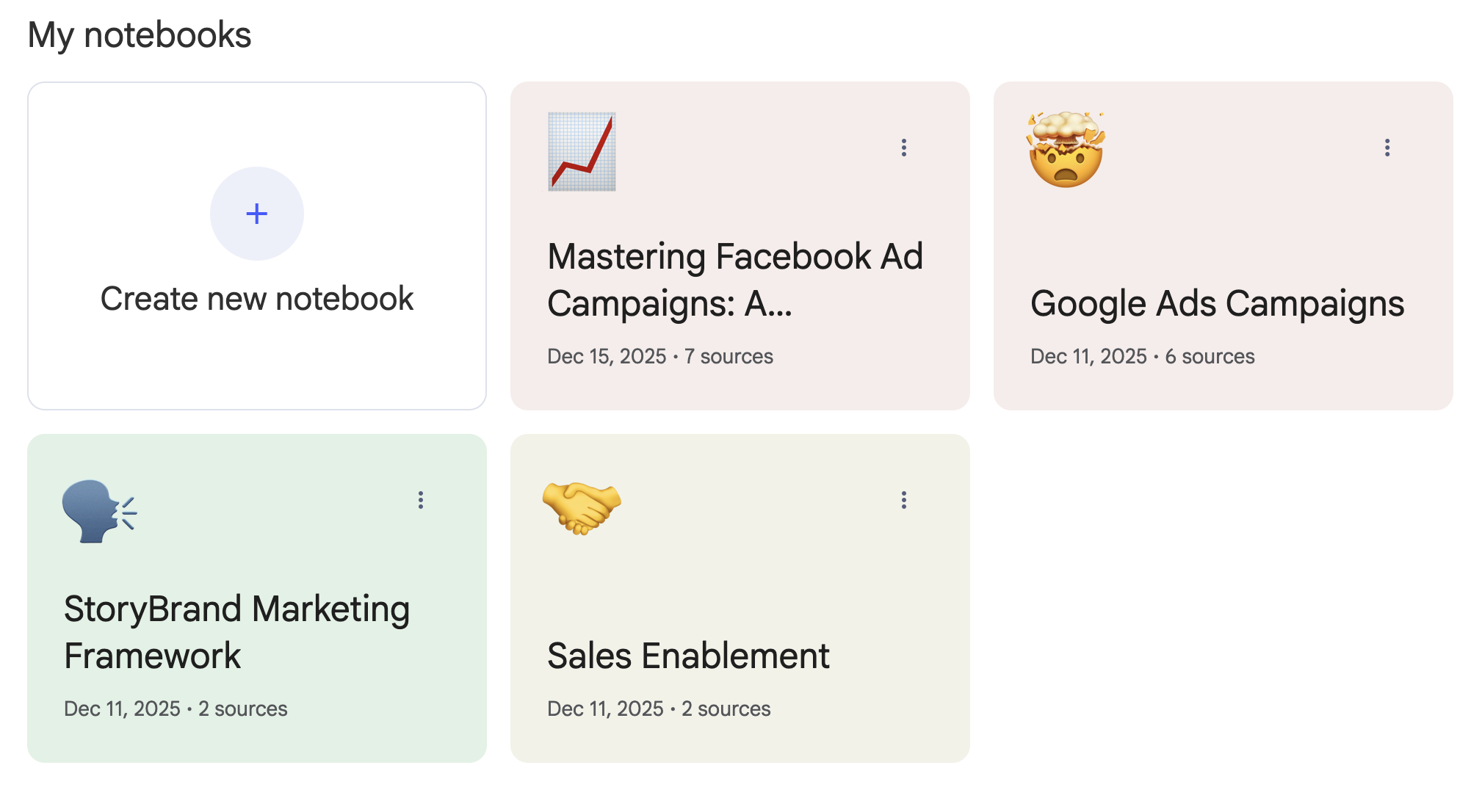
My first few notebooks during the end of the year
Your Source Quality
Let me expand on that third point a bit. I've done a lot of work in healthcare marketing, which is a more regulated type of marketing than some others. Health systems can't follow generic marketing advice after a certain point, so you need to get more specific.
But all of the major LLMs understand that distinction. They might trip up a bit on exactly which pieces of marketing advice are relevant, but they'll mostly be right.
The advantage with NotebookLM is that I can focus on the marketing voices I respect the most. I can vet which marketers will serve as my virtual advisors on any given topic.
A related example: I work for a company that builds custom software, and I'm not a programmer. When the CTO tells me how something works, I take the best notes I can. I also record the conversations so I can reference them later. Those conversations have become part of a Notebook, and our team has been able to pull out the relevant technical language as needed. Those email drafts get blessed by the CTO before we send them out, but he doesn't have to spend all of his time explaining the same point to us again and again.
We get the right language based on how we do things. We're not mixing in the language of other companies by relying on an LLM to go out an just pull from the web.
The same can work for you in your own marketing upskilling.
Collect and Load Your Sources
Now here's the make or break part of the equation: the quality of the sources YOU provide.
The good news is that you can grab YouTube links. You can add articles from the web. You can add your own notes in text format.
Just start a new notebook, and add it all in.
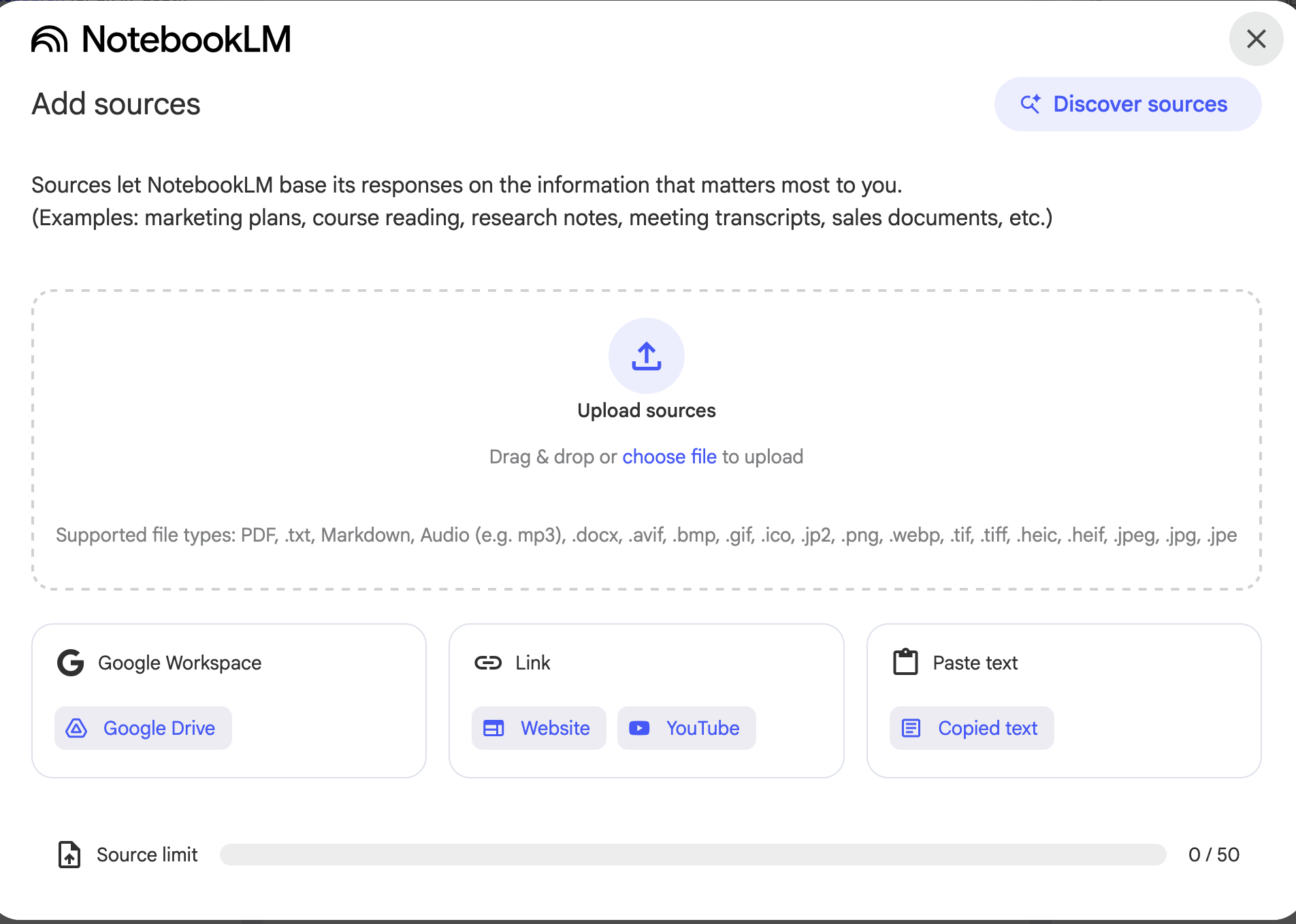
NotebookLM allows for a variety of types of sources. I find this super useful for capturing knowledge from YouTube videos.
Extract the Knowledge in a Number of Formats
When NotebookLM first came out, it provided audio overviews of everything you'd uploaded. It was a nice idea, but I didn't really find it all that appealing. I'm too impatient sometimes to site through a podcast or a video.
Now, you have options.
Want an infographic based on all your sources? NotebookLM will create one. How about a mind map or a report?
I've actually been gravitating towards slide decks for a distilled yet still somewhat detailed overview.
When I have questions or want to dig deeper, I can go back to the original source, or I can query the database further.
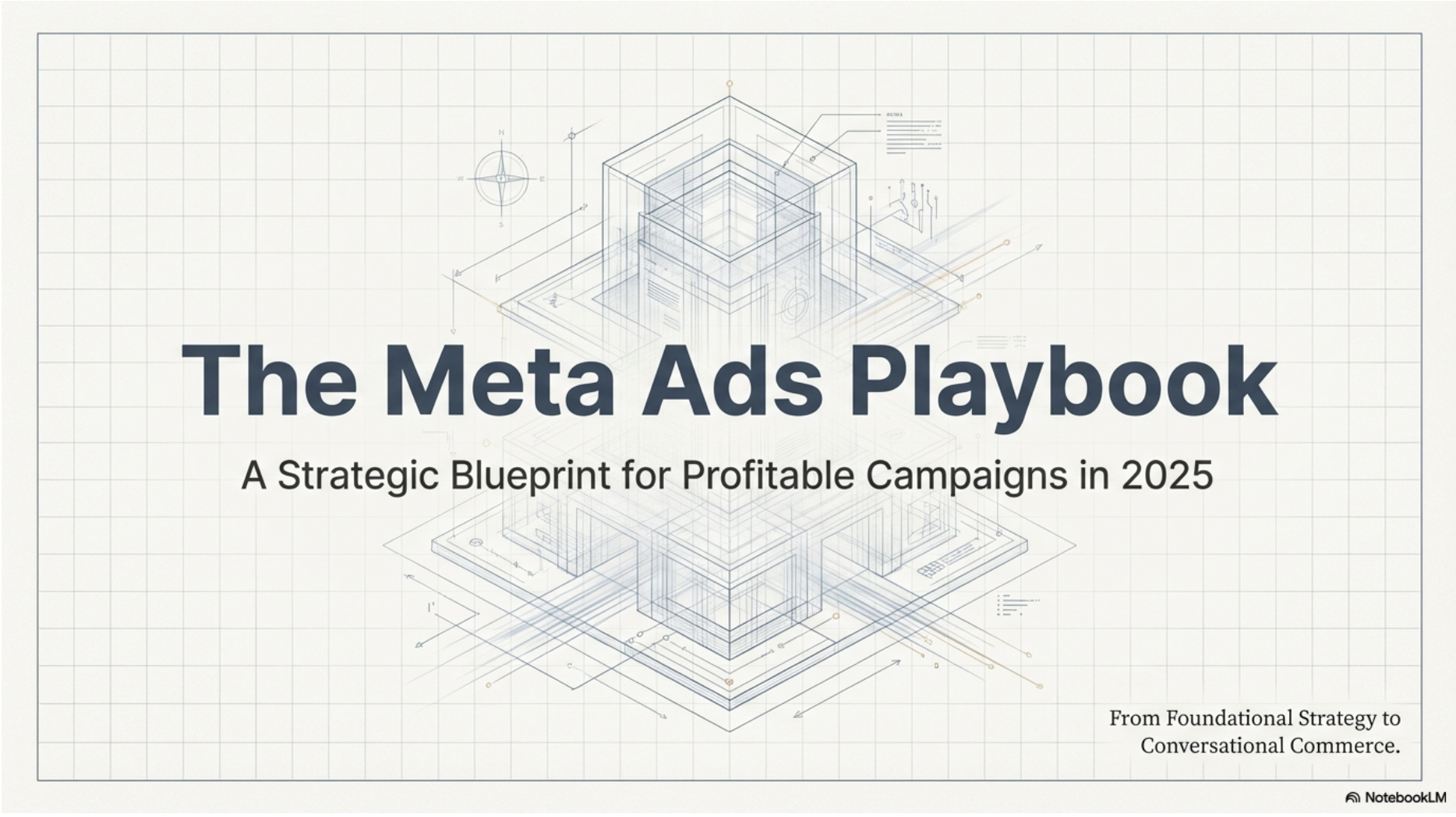
A custom slide deck based on the sources I uploaded
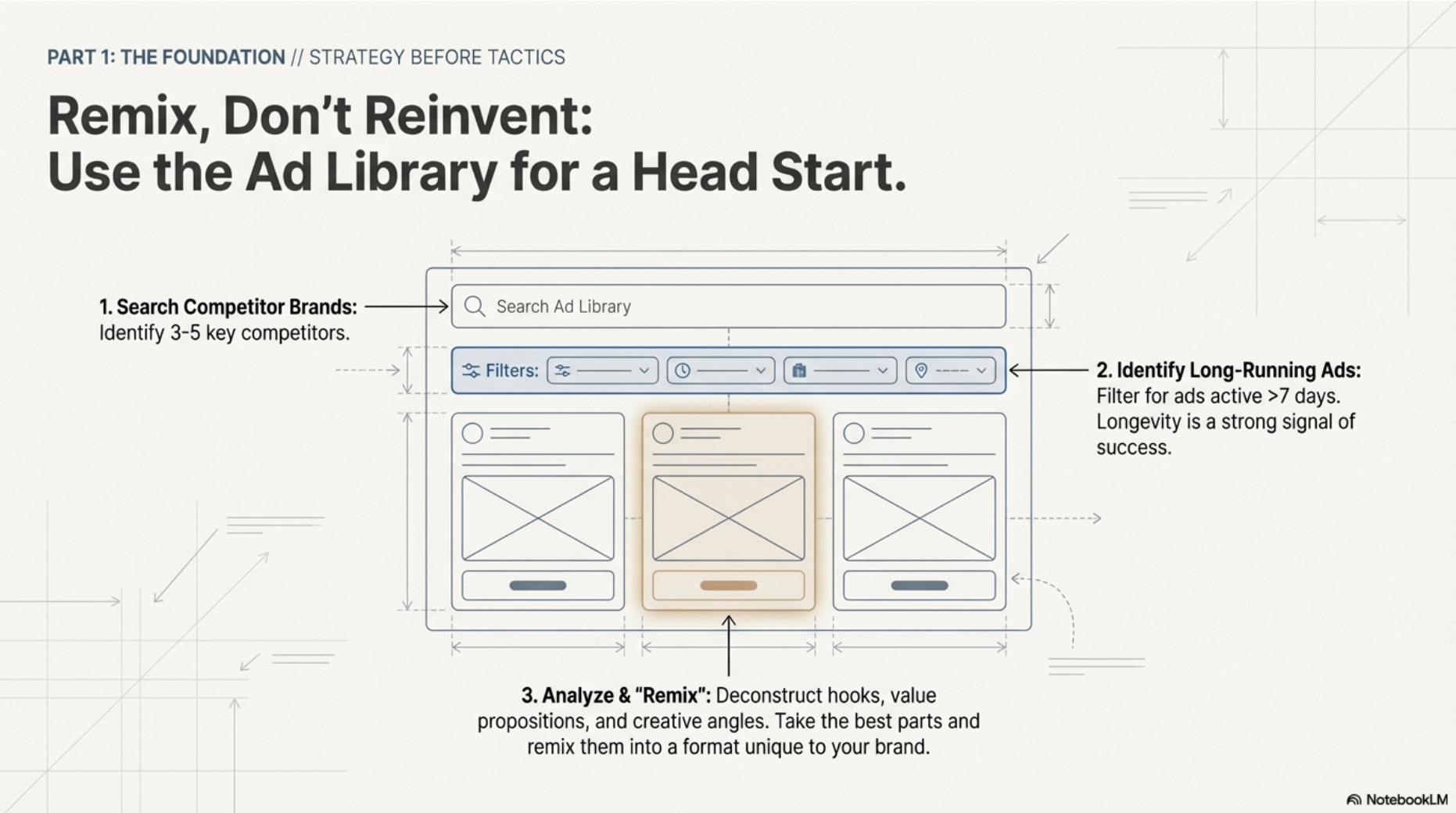
The slide designs are solid and would likely be useful enough for internal training purposes for a marketing team.
Now Is the Time for Rapid, Reliable Learning
Around the dinner table, we're frequently beginning to talk about whether or not we believed the news item that broke that day. Someone posts it on a social media site, and a family member has to confirm its legitimacy on a handful of news sites before believing it to be true.
The same type of vigilance is required for what we read from in our LLM of choice. You can't accept the recommendation or quick answer at face value. We have to dig in and make sure that what we're reading matches up with a data source somewhere.
A system like NotebookLM will help us verify our own sources at the point of upload so that we can focus on the main point of this exercise: learning how to continually sharpen our skills.